


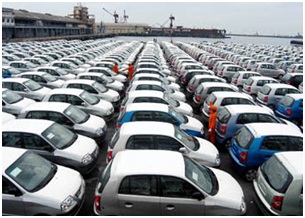
The Indian government is coming up with star labelling for the automobile sector in order to stipulate strict fuel efficiency norms for automobiles. The Bureau of Energy Efficiency (BEE), a statutory body under the power ministry mandated mandated by the Prime Minister’s Office to stipulate the norms under the Energy Conservation Act, together with the Ministry of Road and Surface Transport has finalised Corporate Average Fuel Efficiency — where the fuel economy of an entire fleet of a car manufacturing company is measured. To make it easy for the automobile industry to adopt the standards, the BEE has planned to harmonise the energy efficiency labelling with emission norms. Under the scheme, in a stipulated time span all vehicles would have to follow star ratings or else they will not be allowed to sell.
The objectives of the Standards and Labelling Programme is to provide the consumer an informed choice about the energy saving, and thereby the cost saving potential of the equipment. This is expected to impact the energy savings in the medium and long run while at the same time it will position the domestic industry to compete in such markets where norms for energy efficiency are mandatory.
The labelling scheme was launched in 2006 and is currently invoked for equipments/appliances like frost-free refrigerators, tubular fluorescent lamps, room air-conditioners, direct cool refrigerator, distribution transformer, induction motors, pump sets, ceiling fans, LPG, electric geysers and colour TVs.
According to official figures, India has 14 million cars and three million SUVs. At present the automobile industry is growing at a rate of 14 to 17 percent per annum and annual sales growth is over 12 percent.